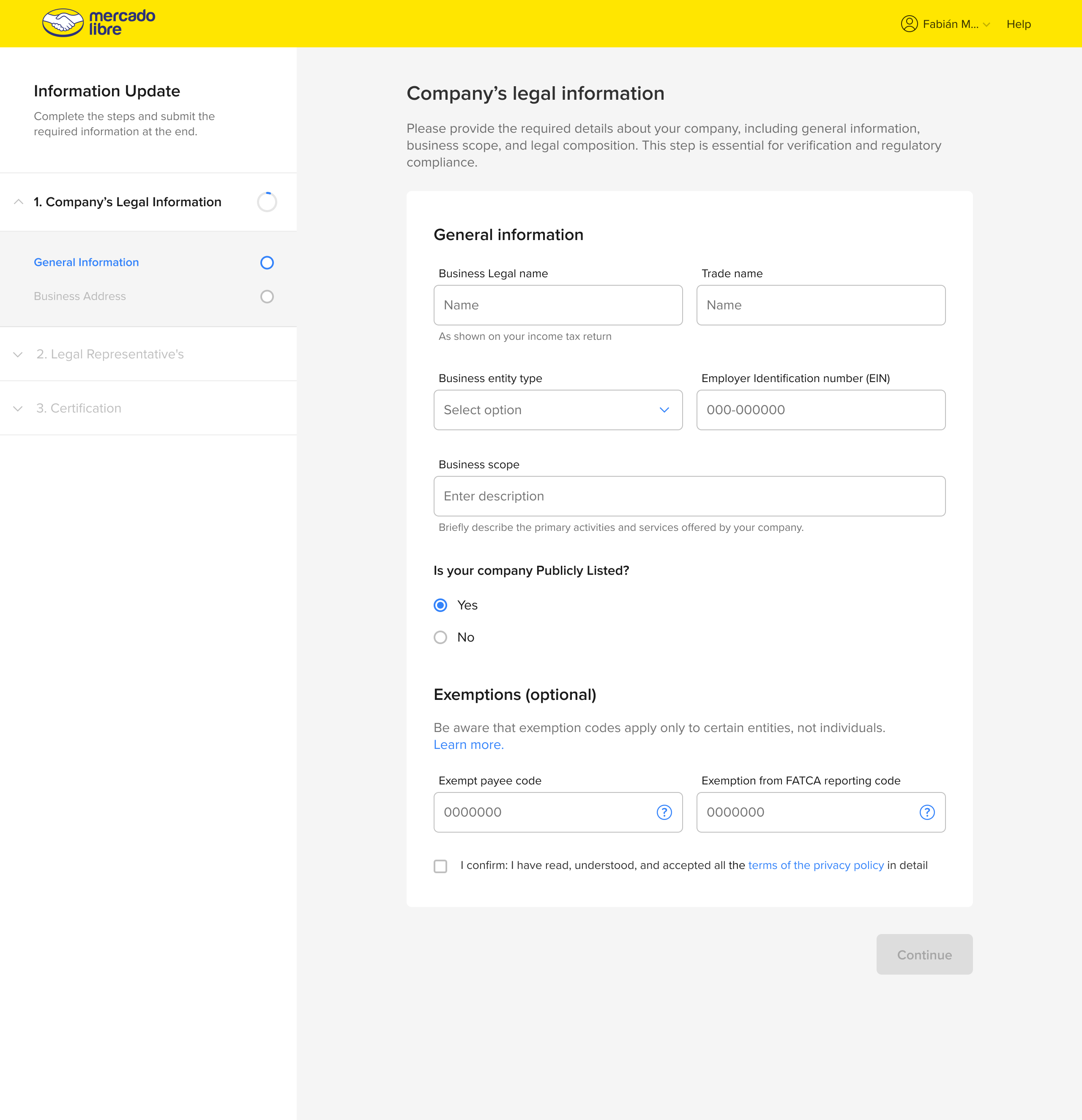

This project involved designing the end-to-end verification and security flow for new international sellers (China, Hong Kong, and the US) registering to operate on Mercado Libre.
Triggered immediately after registration, this comprehensive Identity Authentication process guides users through critical validation steps, including:
-Company informationLegal representative dataBiometric facial recognition
- Submission of official identity
- Corporate certifications (banking, import, and constitutional documents).
The core objective was to ensure full compliance with current legal regulations and international standards, guaranteeing a marketplace of verified, reliable sellers for our global customers.
Client: Mercado Libre - Cross Border Trade
Service: Product Design
Year: 2021 - 2023
We identified that a significant number of Mercado Libre sellers faced the following issues within the verification experience:

The required documentation was difficult to understand, resulting in the rejection of nearly 80% of submitted forms.

The live experience was overly complex due to unclear steps and use cases. Additionally, the inability to edit information led to a 37% user drop-off rate.

64% of users failed to complete the validation process due to a lack of preparation, as they were not informed in advance which documents would be required.


We conducted a detailed review of the live experience to identify key friction points and areas of impact within the flow.
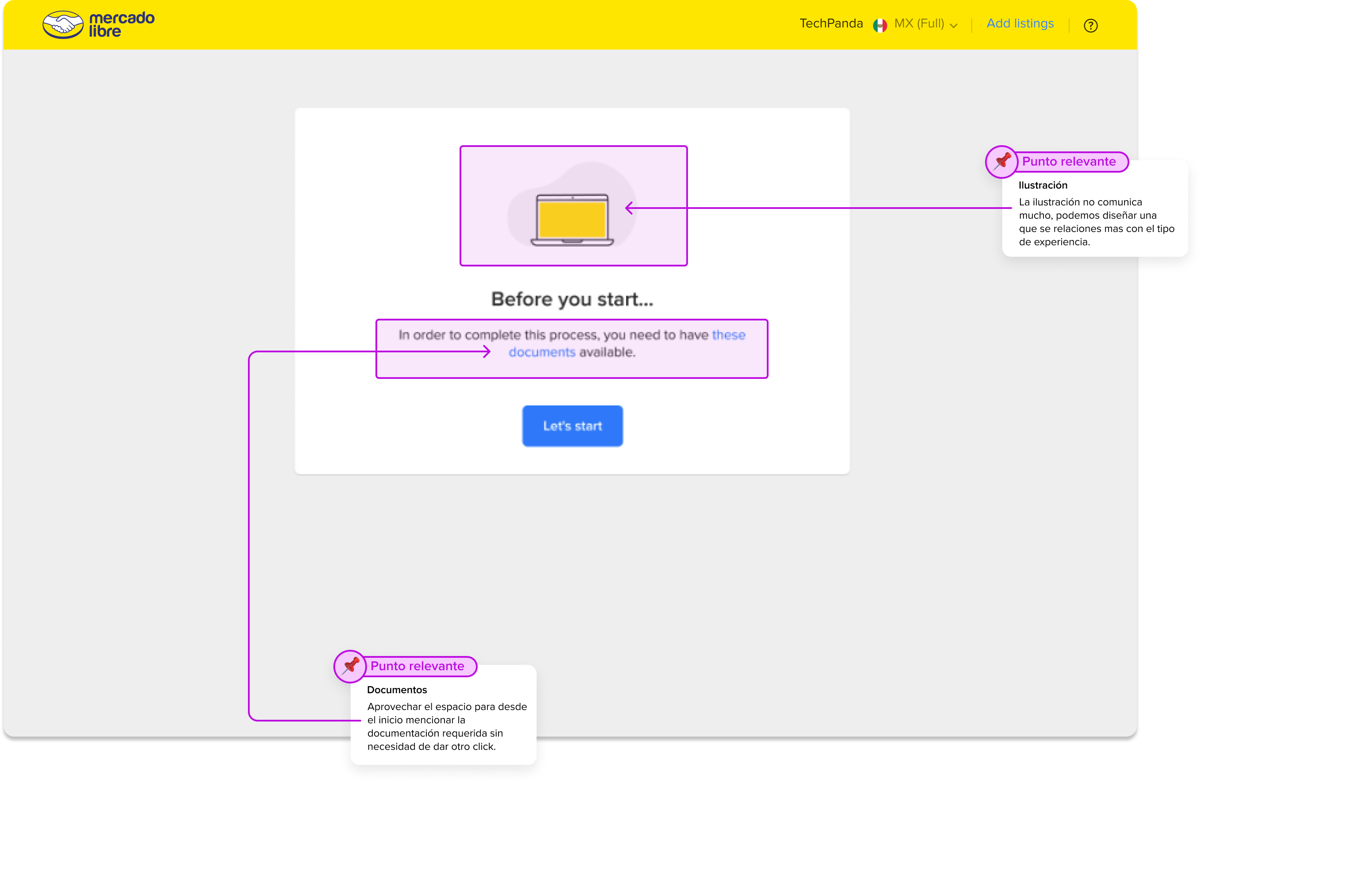
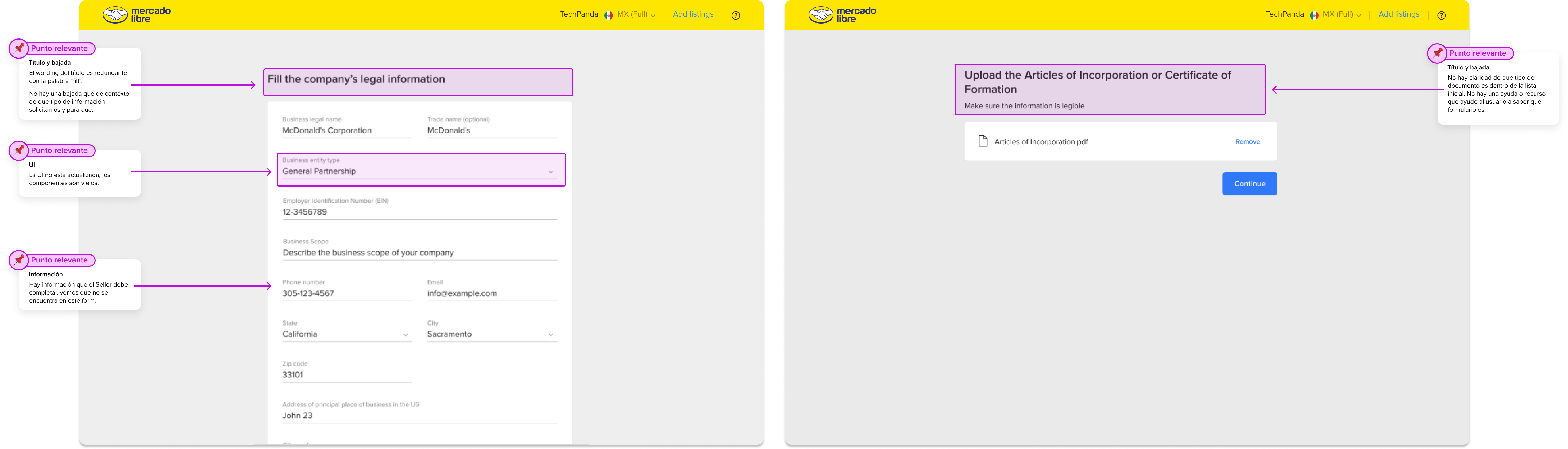

Using a user flow, we mapped out every step of the information request process. This allowed us to quantify the required interactions and proactively identify potential friction points before they impacted the user.

We held collaborative sessions with the Product and Engineering teams to review every touchpoint. Our goal was to mitigate potential pain points and ensure all edge cases and user scenarios were fully addressed.
Following a successful handoff, I closely collaborated with engineering during the QA phase to maintain design integrity. We then launched a pilot with a small seller group to validate the experience and refine the flow based on real-world feedback.
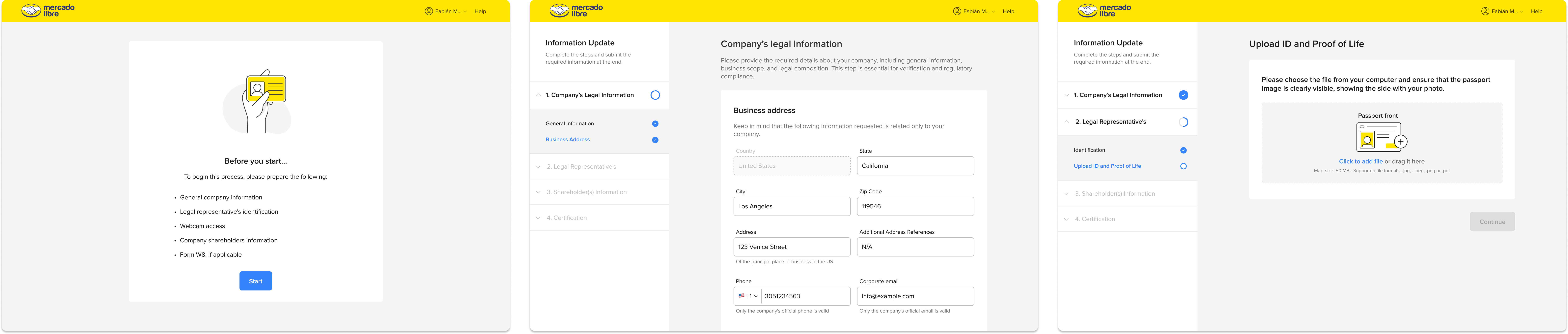
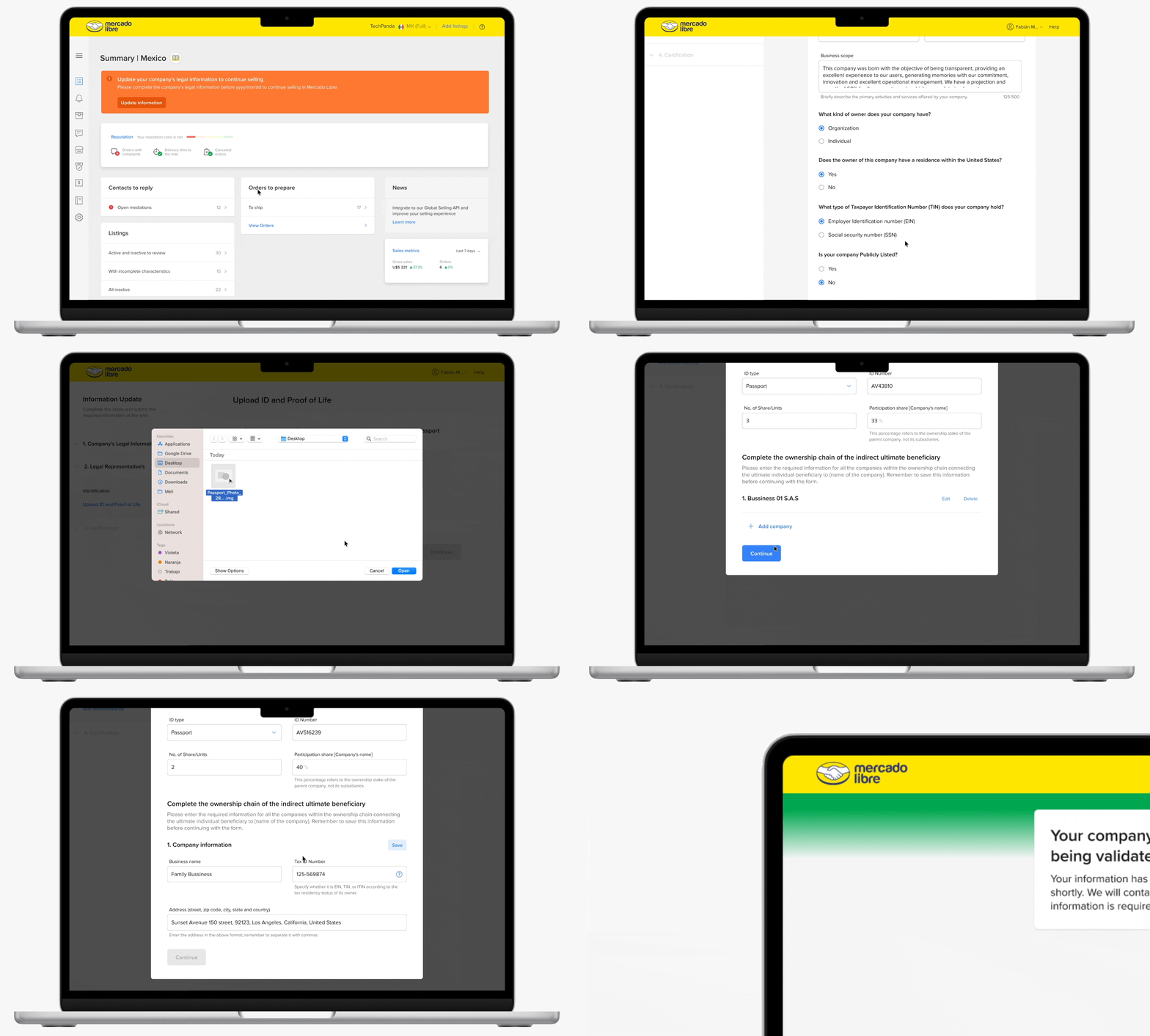
- Improved process understanding: Achieved greater overall clarity and a deeper understanding of the identity verification process for new sellers, ensuring they understood each step of the journey.
- Reduction in abandonment rate: By providing transparency and clear information requirements at the start of the flow, we achieved a 76% decrease in process abandonment, significantly increasing completion rates.
- Documentation optimization: By streamlining the steps and clarifying the requirements for W8/W9 forms which previously had an 80% rejection rate we achieved a significant reduction in errors and resubmissions, optimizing the overall validation cycle.