
This experience provides Mercado Libre sellers with complete traceability for product removals from fulfillment centers, addressing needs such as low turnover, damaged stock, or inventory optimization.
A key distinction for the Cross Border Trade (CBT) model (specifically for sellers in China, Hong Kong, and the U.S.) is the integration of an intermediary role. This representative acts on the seller's behalf within Latin America to oversee the end-to-end dispatch process and regional logistics.
Client: Mercado Libre - Cross Border Trade
Service: Product Design
Year: 2024 - 2025

Users: New and existing Cross-Border Trade sellers.
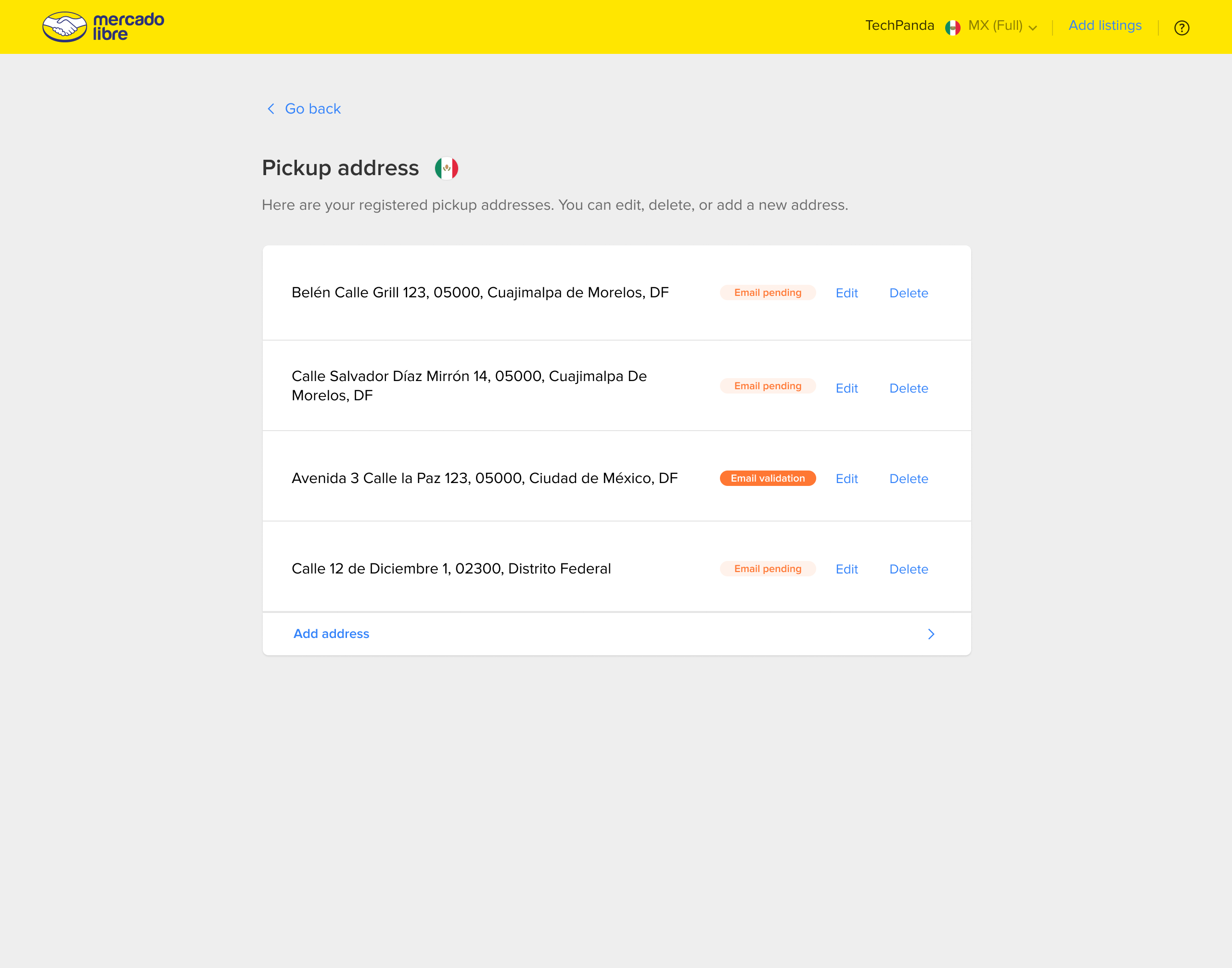
The Challenge: Within the Selling Preferences section, sellers are required to register and manage their pickup addresses. A critical requirement in this flow is the inclusion of the intermediary's email address; this specific data point is the key to enabling logistics scheduling in subsequent phases.
Users: New and existing Cross-Border Trade sellers.
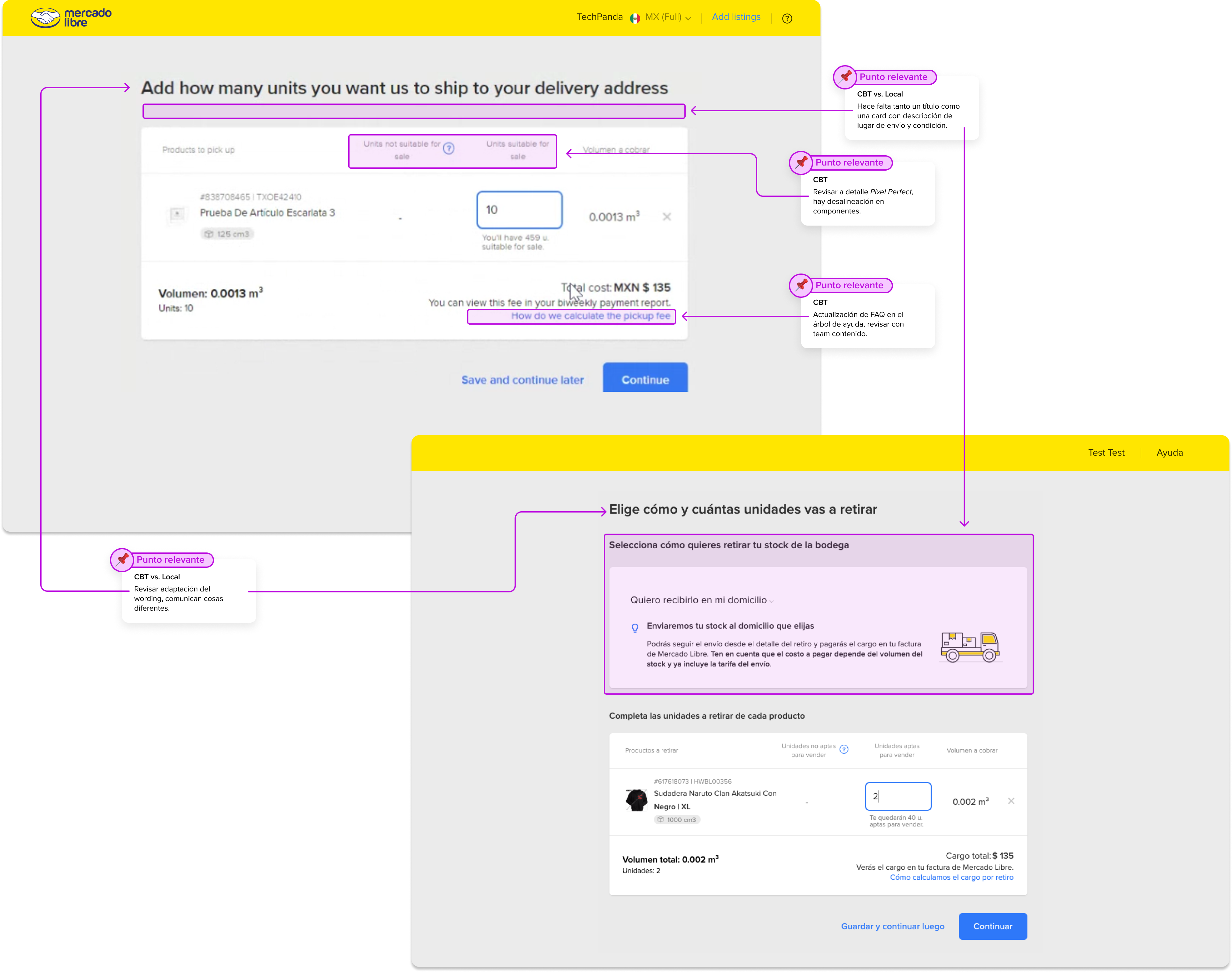
The Experience: The seller selects the specific items they wish to withdraw, followed by a confirmation of the shipping address (previously configured in the system).
Users: Drivers and Intermediaries (Seller representatives at the location).
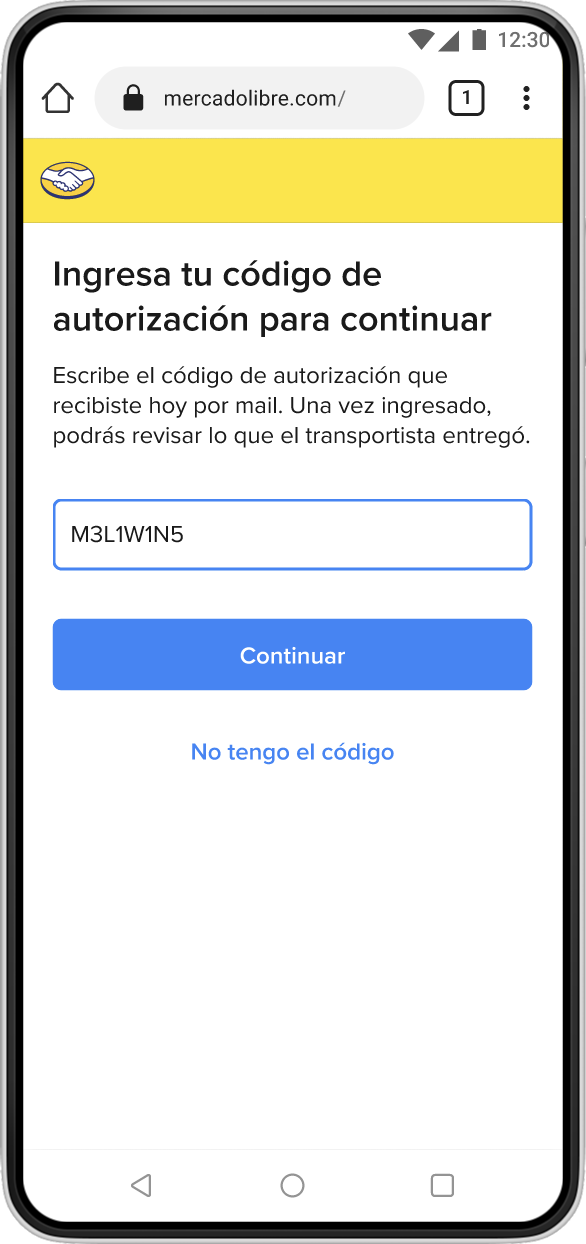
The Process: This stage facilitates the physical transfer of pre-scheduled products. The flow concludes with a security protocol: the request and validation of an authorization code, which formalizes the withdrawal/delivery transaction and ensures a secure handoff.

A 65% inconsistency rate in delivery success, driven by high volumes of ineffective deliveries reported by sellers and logistics partners.

83% of sellers reported they hadn't received their products, even though the system marked the tasks as completed. This discrepancy highlighted a major flaw in the handover validation process.

Negative impact on FPP (Fulfillment Performance Program) payments, Mercado Libre's performance-based bonus scheme.


I conducted a comprehensive gap analysis, comparing the current live experience against the local seller journey. The goal was to pinpoint specific friction points and assess the operational impact of transitioning to a more centralized and secure model.
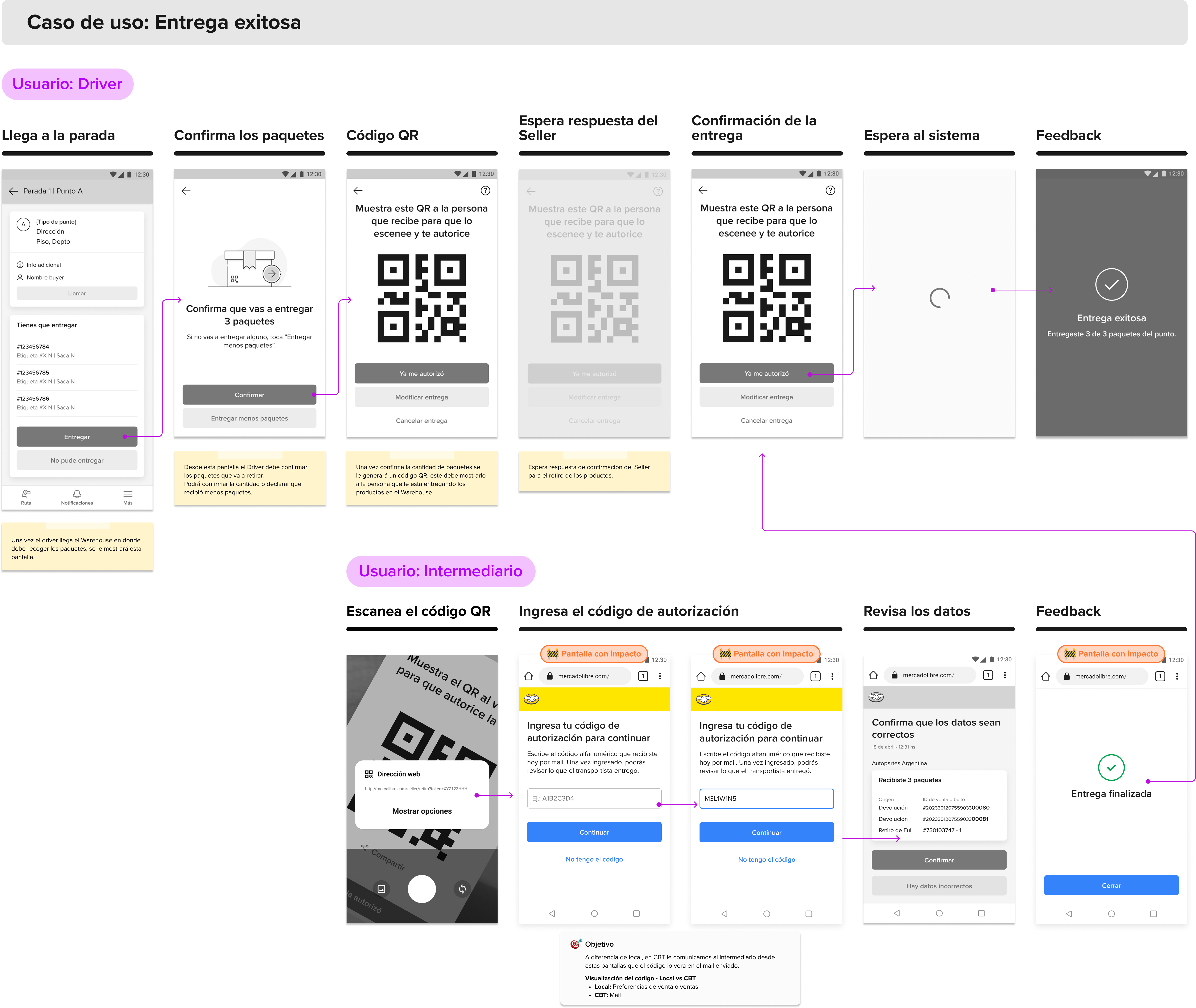
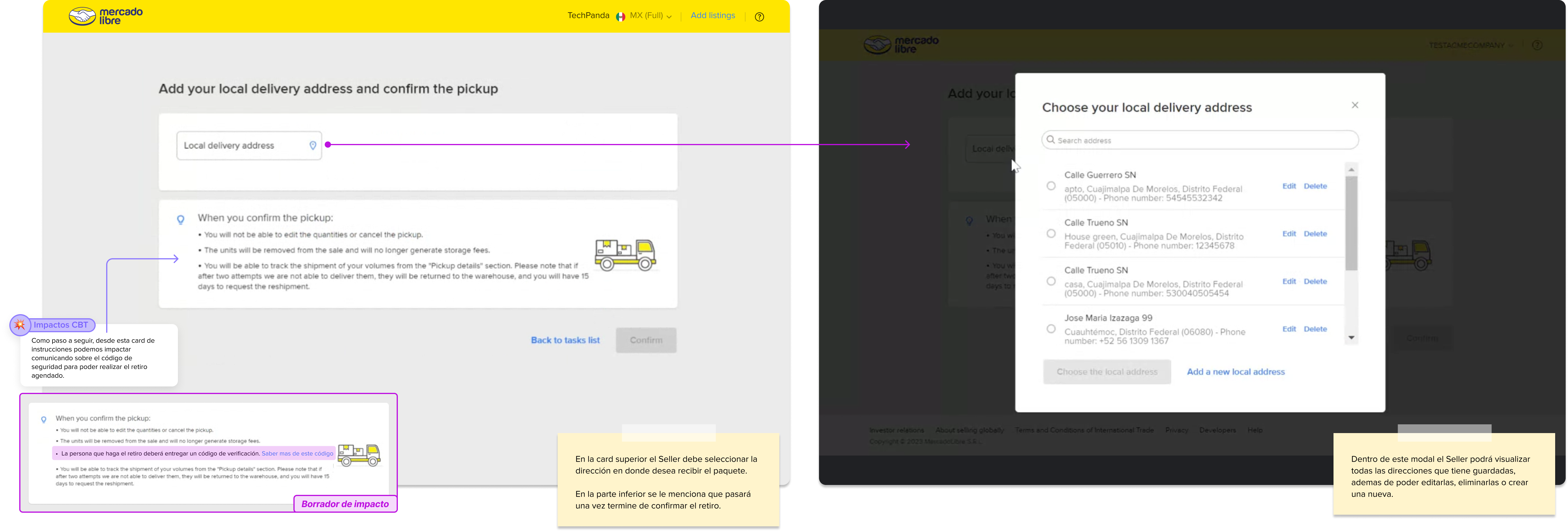
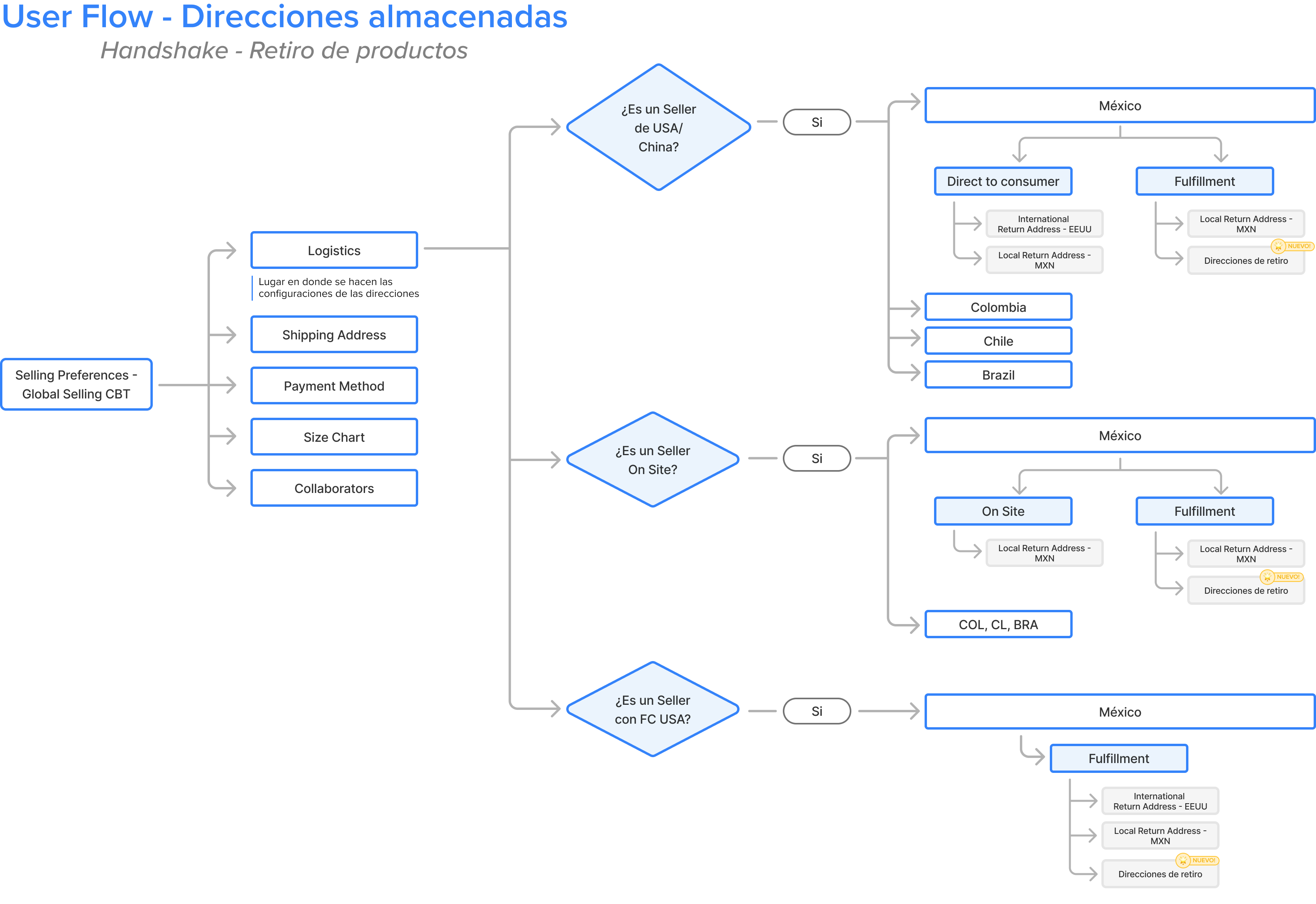
Using user flows, I mapped out the information requirements at every stage of the journey. This analysis was crucial to determine the ideal storage location for withdrawal addresses and to evaluate how their configuration might impact other system settings, such as return addresses
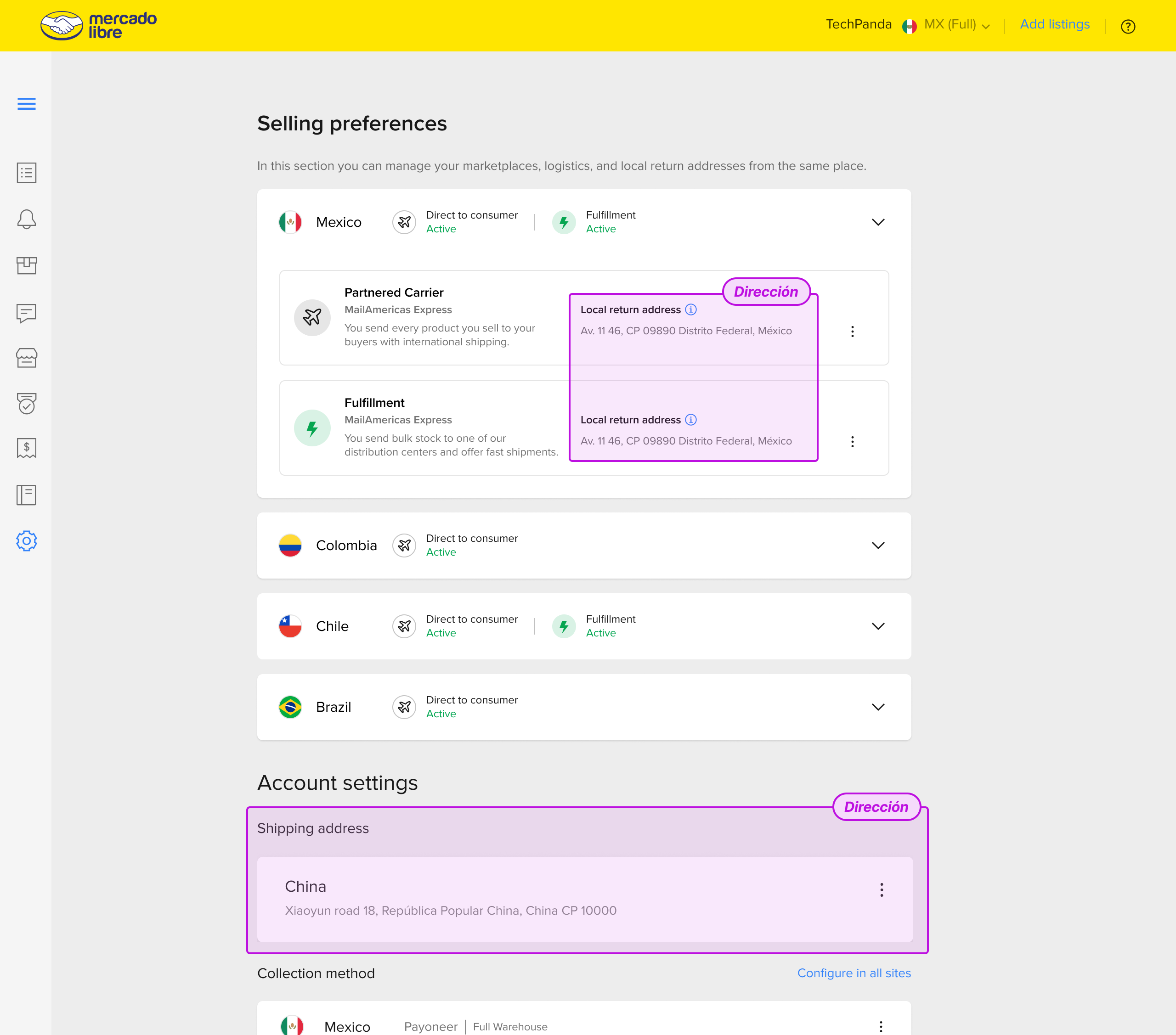
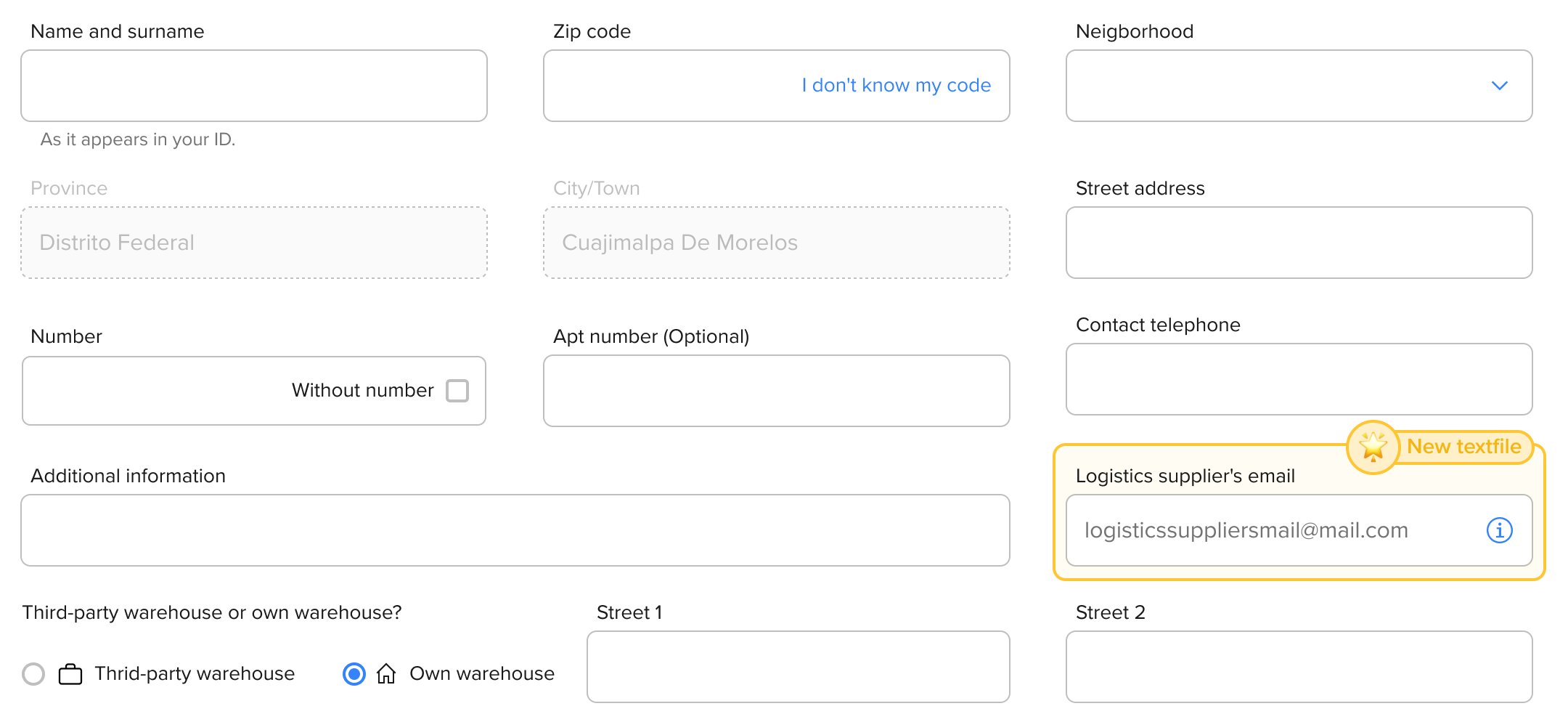
Before moving to high-fidelity designs, I developed low and mid-fidelity wireframes. These proposals were reviewed internally to explore opportunities for integrating cross-platform experiences and information within the Global Selling ecosystem.
Feedback & Validation Sessions: I led sessions with key stakeholders (Product, Engineering, and Design) to validate potential use cases and analyze technical constraints, ensuring the solution was both user-centric and feasible.
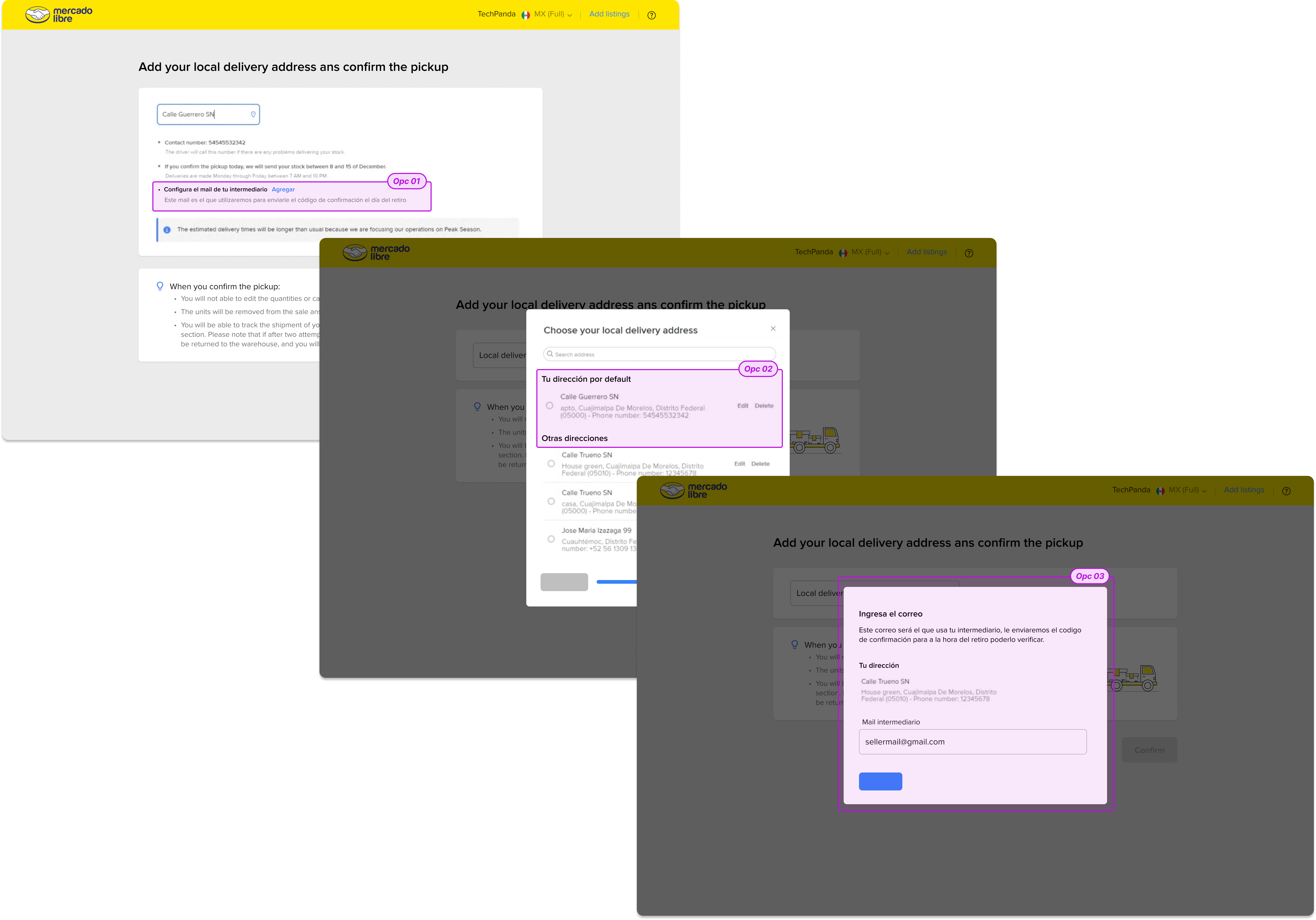
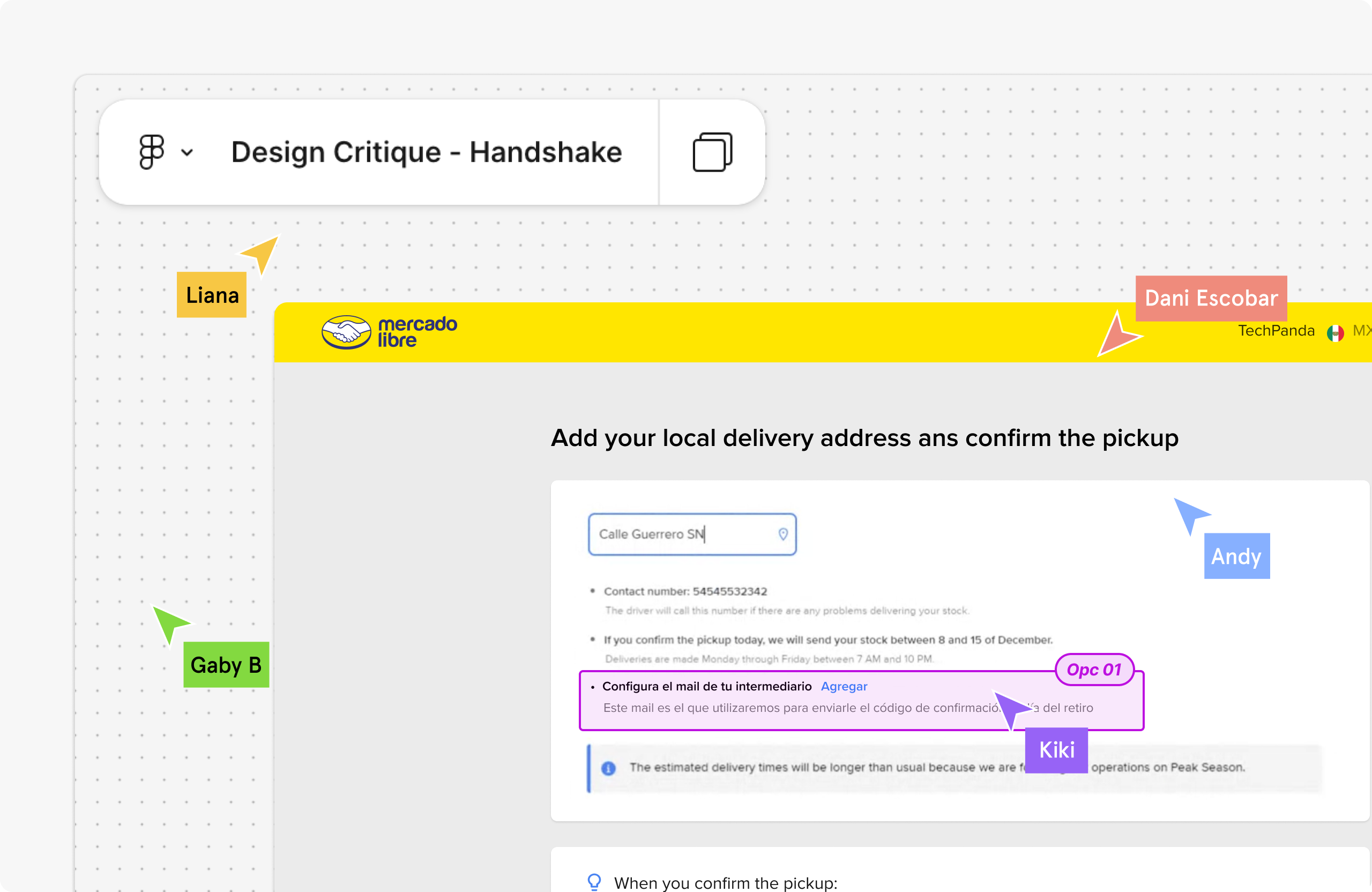
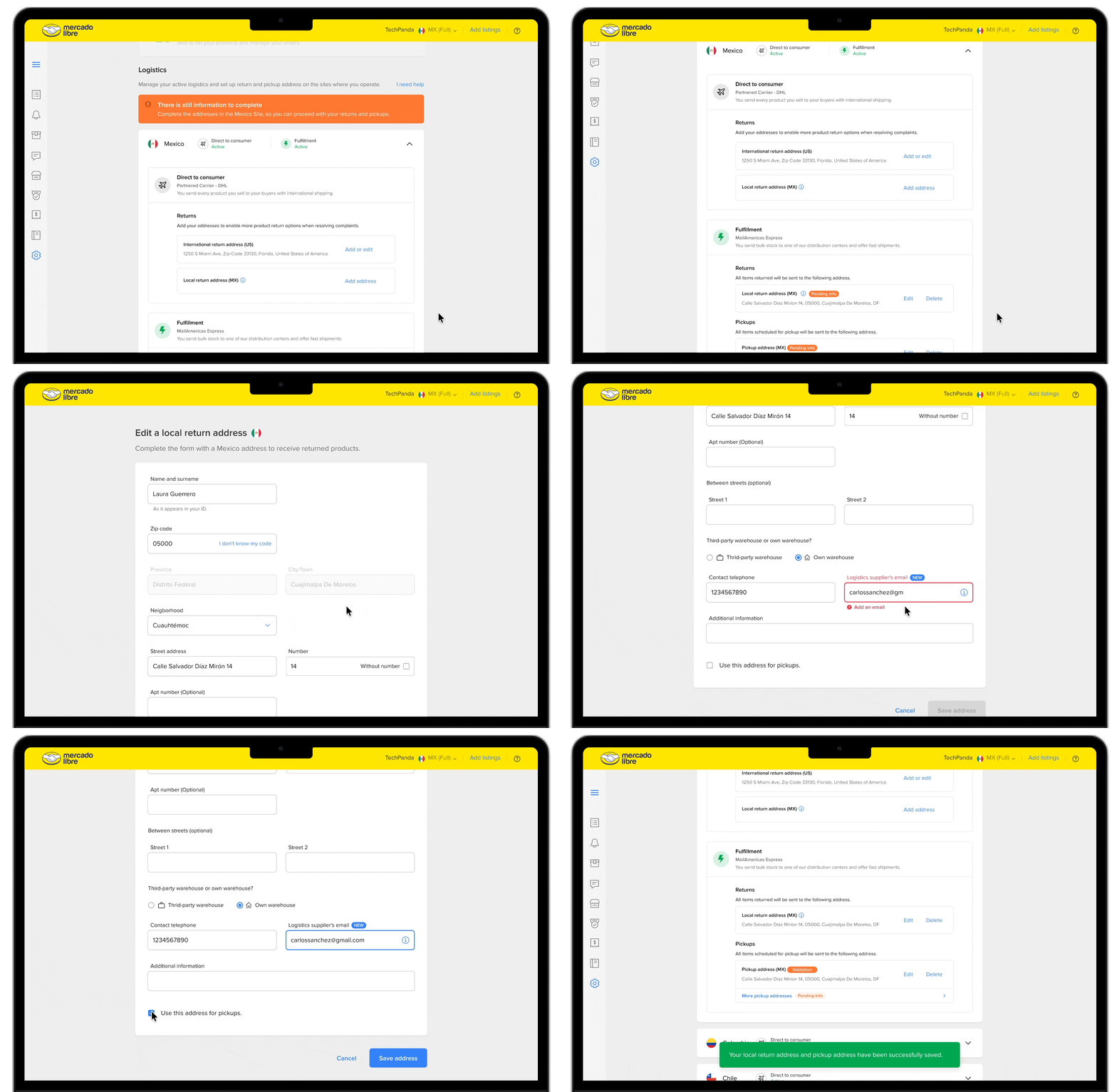
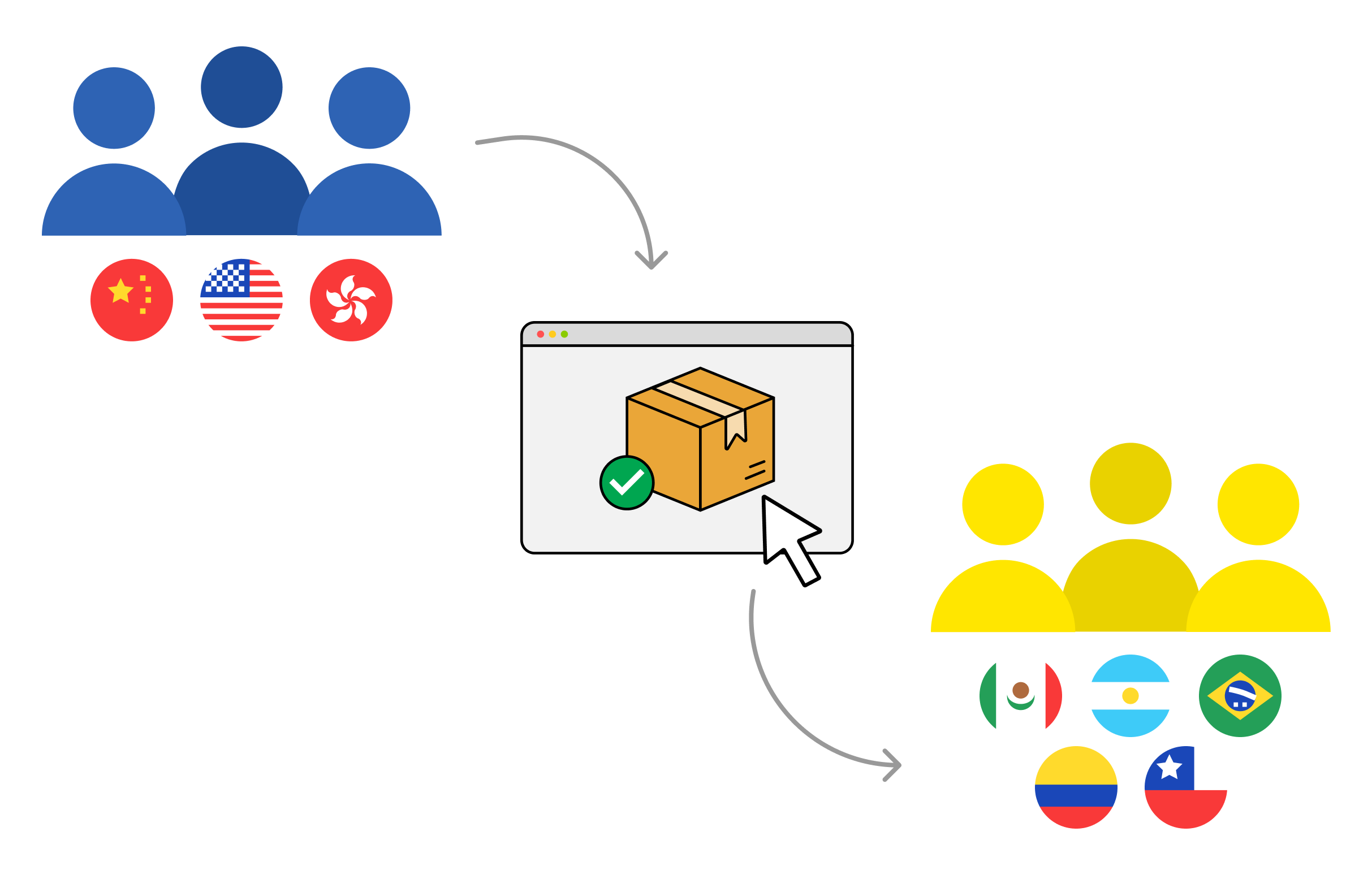
After the final validation, we partnered with the local product team to oversee the adaptation of the design. This handover process ensured that the core experience remained consistent while being tailored to fit the technical and operational needs of the local platform.
Following the formal handoff, I provided continuous UX oversight during the development phase. This included conducting Design QA to review and validate the implementation, ensuring the final product remained faithful to the original user experience and technical specifications.
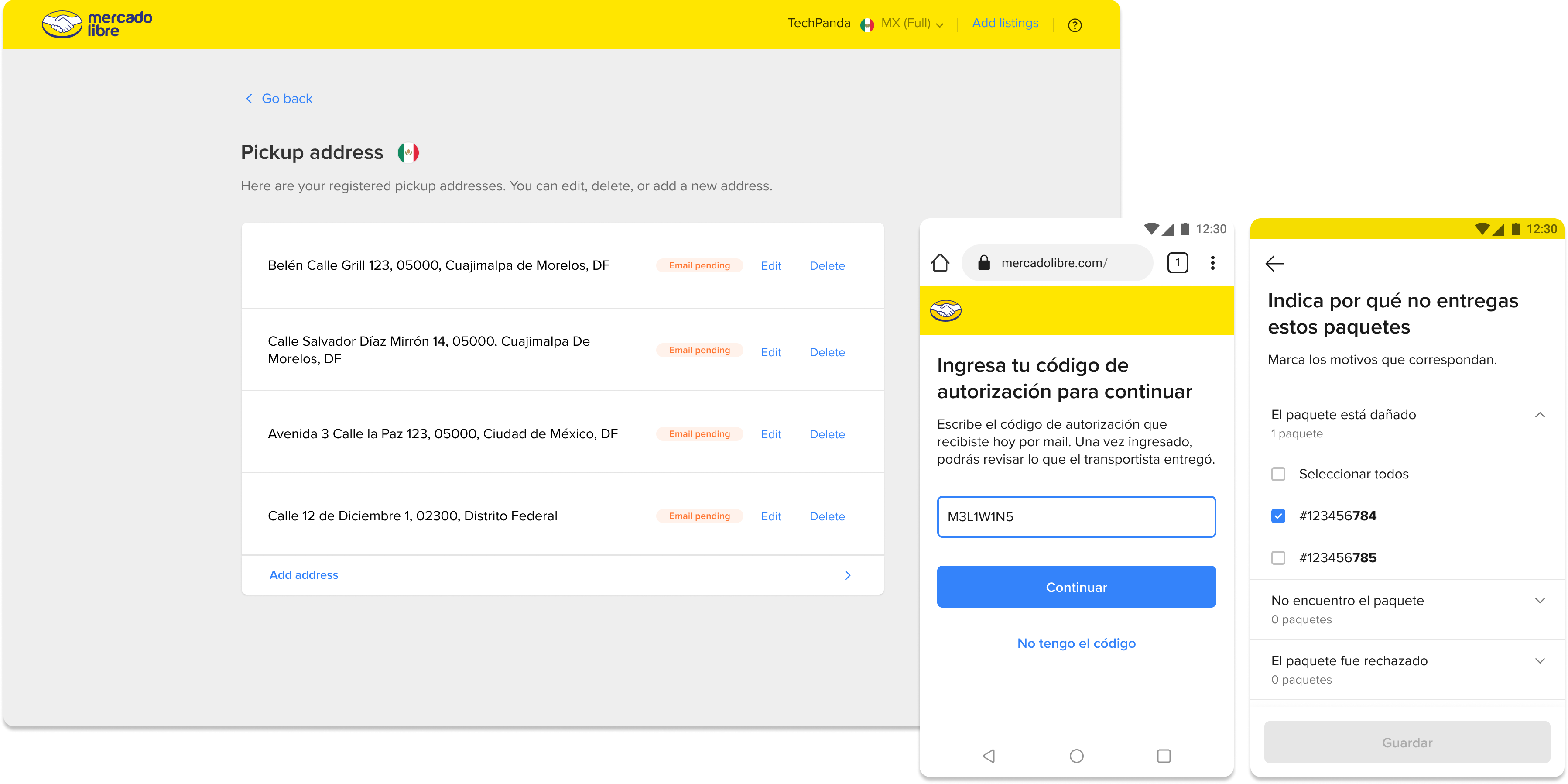
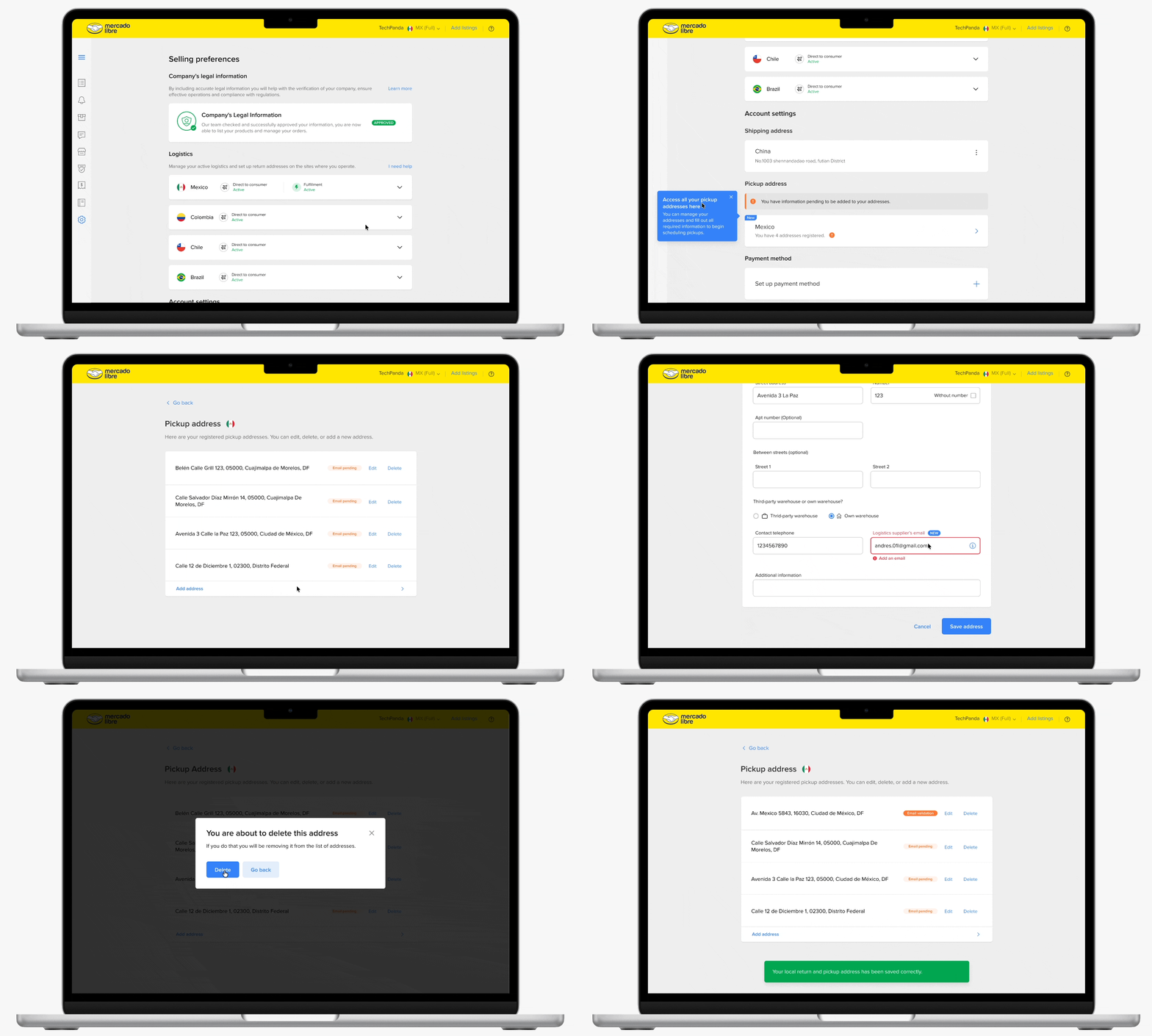
The new experience transformed a fragmented process into a high-performing logistics flow, achieving a 68% optimization in management efficiency compared to the legacy system. This solution provided sellers with total clarity regarding address storage and management. We reinforced delivery security by implementing a confirmation code and established more transparent communication between all users.
Operational coherence: Simplified the data architecture for withdrawal addresses, making it easier for Sellers to configure and manage their locations without friction.
Design standard and adoption: The experience was so successful that it was adopted as the official design standard by the local team for their own platform implementation.
Proven scalability: The system logic and validation framework were successfully reused in a secondary project for product withdrawals, proving the flexibility of the design.
Financial and operational Impact: 85% reduction in failed deliveries by implementing secure "Handshake" codes and accurate data tracking, directly safeguarding seller performance and FPP bonuses.